
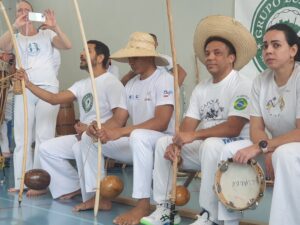
About Capoeira
Capoeira is a Brazilian art form that combines elements of martial art, dance and music within a group setting. Through its music and traditions it provides a rich living history and cultural heritage.
The exact origins of Capoeira are unclear. It took shape in the context of slavery during Brazil’s colonial period (1500 – 1815).
African slaves were prevented from openly engaging in cultural, martial or spiritual practices and it is thought Capoeira developed as a creative solution to this repression – Life finds a way!
It was an unpermitted/illegal activity in this period and continued to be following the abolishment of slavery in 1888 until its legalisation in 1940.
Within the Capoeira community it is often said that Capoeira is life (Capoeira e a vida) – within it you can create and observe all aepects of life and human relationships, and experience the natural and logical consequences of how you respond and relate to others in real-time.
Capoeira is inclusive and provides a space for all to explore their sense of identity and belonging. Capoeira e pra homen, menino e mulher.
About Grupo Luanda
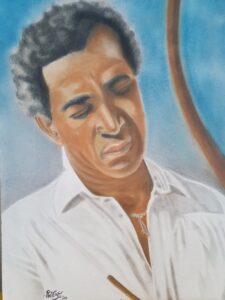
Grupo Luanda was founded in 1964 by Mestre Eziquiel (18/10/1941 – 26/03/1997), in Bahia, the birthplace of Capoeira.
Mestre Ezequiel was a student of Mestre Bimba, creator of the Regional style of Capoeira which gave a technical martial arts structure to training.
Mestre Ezequiel was known for his musical ability, recording a number of albums and creating a number of songs that remain known and loved by Capoeirstas across the world today.
The legacy of Mestre Ezequiel lives on through Grupo Luanda, with the preservation and dissemination of capoeira culture and the traditions of the Regional style. Alongside Capoeira this involves a focus on other related forms of cultural expression such as maculelê, samba de roda, and puxada de rede.
Inclusivity and openness are also key in Grupo Luanda – Mestre Eziquiel was known for welcoming all to learn and for being approachable; his musical compositions and legendary presence continue to influence capoeira culture.
You can find out more about Grupo Luanda here.
About Professor Cachorro
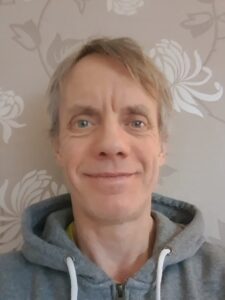
Professor Cachorro started training Capoeira in 1999, and joined the Grupo Luanda Capoeira family in 2003, training under Mestre Arquimedes.
The ethos and values of Grupo Luanda are something that he holds dear, in particular the inclusivity, maintaining the traditions and culture of the Capoeira Regional style of Mestre Bimba, the community/social focus, and the consideration of technique and theory in relation to individual development.
During his journey in Capoeira he has spent time living in Bahia, seen as the birthplace of Capoeira, spending time on the island of Itaparica and in Resgate in Salvador.
He has had the good fortune to learn from and train alongside many great Capoeiristas, attending workshops and events in Brazil and across Europe.
The founder of Grupo Luanda, Mestre Ezequiel, is known for describing Capoeira as, “o arte de fazer amigos” – the art of making friends – and this is something that Cachorro has seen to be true throughout Grupo Luanda and the world of Capoeira more generally.
Cachorro received his Aluno Formado belt in 2008, and in 2025 was awarded the grade of Professor by Mestre Arquimedes. He has taught and led Capoeira classes for many years, both in Switzerland and the UK.
You can find out more about the classes he offers in Southend and Leigh-on-Sea here.